

From Lecture Halls to Public Squares: MeMo at SBAM 6.0
In Naples, the project joins a discussion on cultural welfare and the university’s role in promoting cultural heritage.
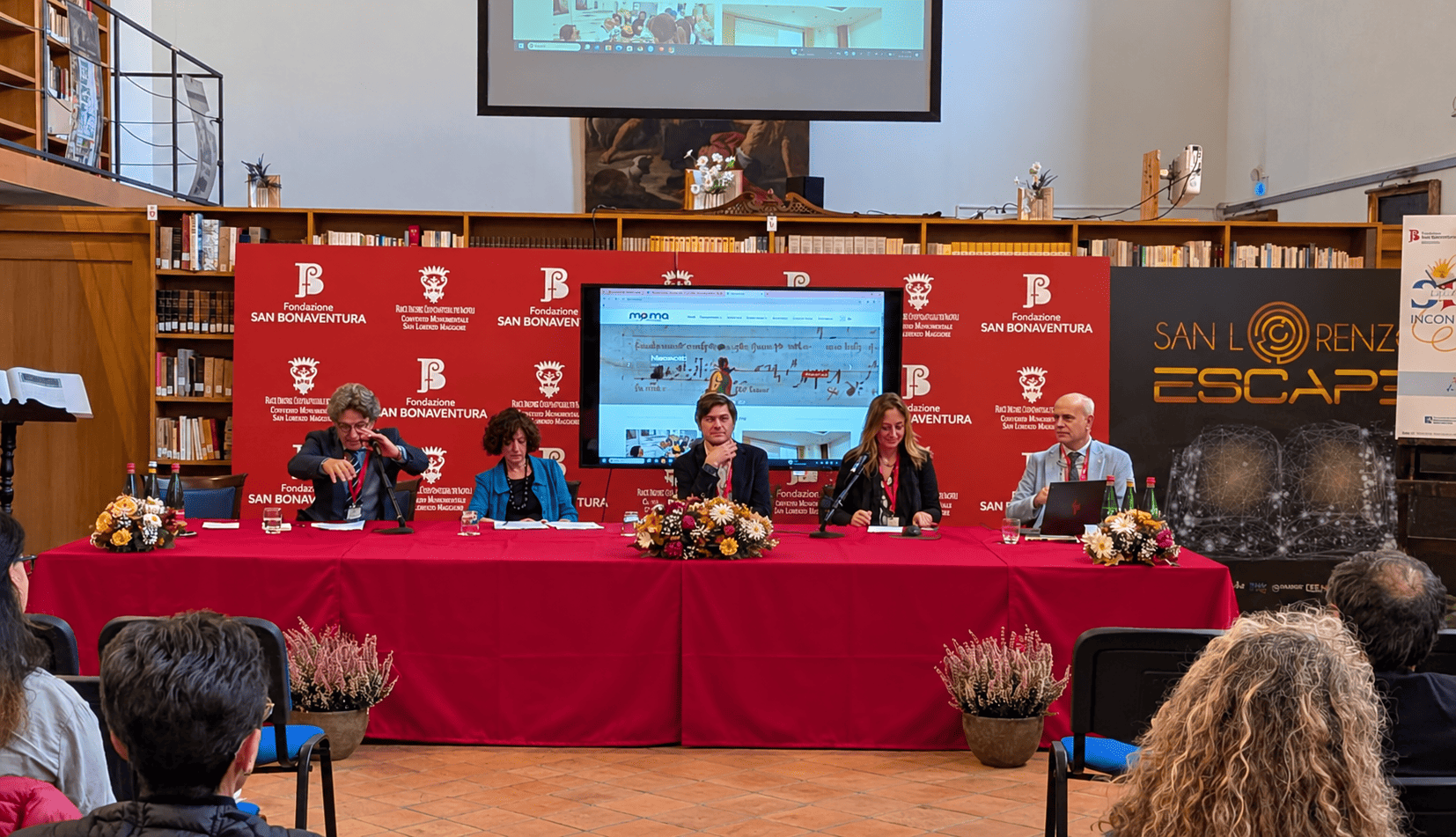
The MeMo – Memory of Montecassino project took part in the roundtable discussion From Lecture Halls to Public Squares: Putting Cultural Welfare into Practice through the University’s Third Mission, held as part of SBAM 6.0 – Incontri Ravvicinati, an event organised by the Fondazione San Bonaventura on 23–24 October 2026 at the Fra Landolfo Caracciolo Library, within the Monumental Complex of San Lorenzo Maggiore in Naples. This year’s edition, entitled Clinica dell’anima. Il contributo degli Istituti Culturali al benessere della persona e della comunità , provided an opportunity to discuss the role of libraries, archives, museums and other cultural institutions in promoting individual and collective well-being.
Within this framework, MeMo contributed to the discussion through presentations by Marilena Maniaci and Nicola Tangari, sharing an experience in which research, education and the promotion of cultural heritage are closely integrated. Their participation in the roundtable demonstrated how the project’s activities can contribute to the university’s Third Mission, fostering engagement with local communities and providing concrete opportunities for training and knowledge sharing.
The presentations focused on the digitisation workshop established within the project, a working environment in which theoretical knowledge and research methodologies are applied throughout the various stages of the process, from the physical manuscript to its digital counterpart. Students play a significant role in these activities, including through internship opportunities. Their direct involvement allows them to engage with practical procedures, tools and challenges, complementing their theoretical education with the acquisition of technical and professional skills in the digitisation and promotion of cultural heritage.
The MeMo experience, however, extends beyond research and education. Equally important is the opportunity to make the results of this work accessible and available for wider use. Transforming manuscript heritage into digital resources helps overcome the physical limitations of places of preservation, expanding opportunities to consult and explore these materials beyond the scholarly community. Digitisation thus becomes a means through which universities can make research findings available to a wider audience, encouraging new opportunities for engagement between cultural institutions and local communities.
Participation in SBAM 6.0 therefore provided an opportunity to place the MeMo experience within a broader discussion of the relationship between culture, well-being and community. The project’s work demonstrates how research and education can contribute to the preservation and promotion of cultural heritage, making the results of scholarly research accessible and available beyond academic settings.