


The Sapienza Research Unit is composed of Cristina Mantegna and Francesca Santoni, who also coordinated its activities, together with Federica D’Uonno, Maria Calvano and Carolina Checchi. During the project’s three-year funding period, the research group worked on the survey, digitisation and description of Montecassino documents produced up to the twelfth century, including both originals and copies. When the project was first conceived, the principal objective was to examine the documents relating to the Terra Sancti Benedicti in order to reconstruct the historical documentary system of the territories governed by the abbots of Montecassino. It soon became apparent, however, that the integrated digital environment envisaged by MeMo offered an opportunity to give the parchments preserved in the Abbey Archive an unprecedented degree of visibility.
This led to a significant expansion of the initial survey. The research was based on the Regesti dell’Archivio, published from 1964 onwards under the editorship of Dom Tommaso Leccisotti and, subsequently, Dom Faustino Avagliano. These volumes provide the only comprehensive overview of Montecassino’s documentary heritage. The catalogue records were then supplemented with first-hand information supplied by the current Abbey archivist, Dom Mariano Dell’Omo.
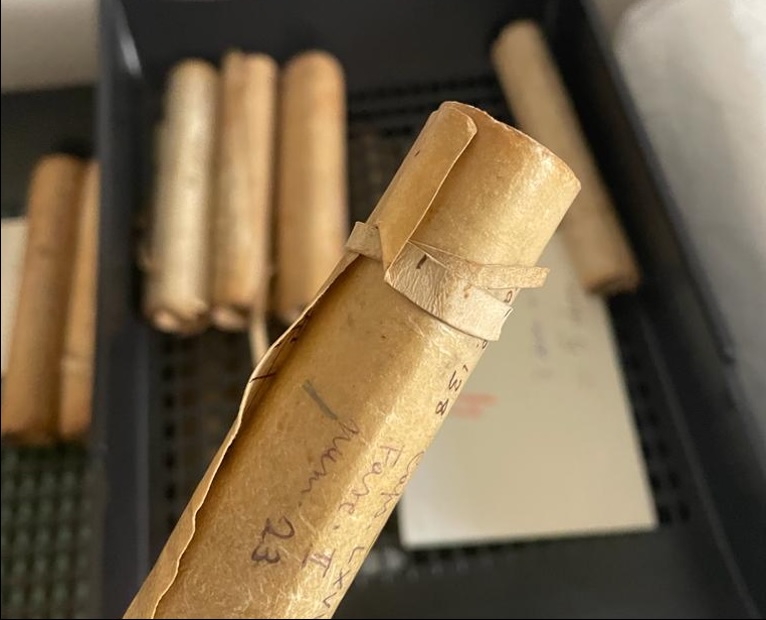
A total of 921 items were identified, most of them preserved in the original and unpublished, or previously published according to criteria that are now outdated. They represent a wide range of documentary types dating from between the ninth and twelfth centuries. Although the parchments vary considerably in size, they are all stored in rolled form. Some are protected by coloured silk veils sewn along their upper edge at an unknown date.
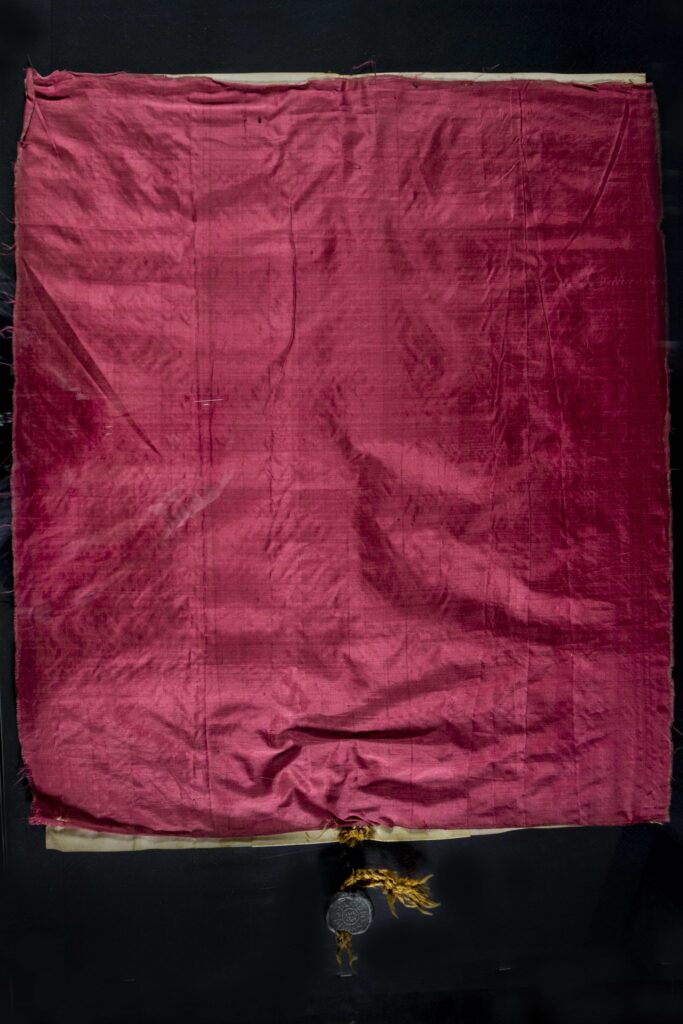
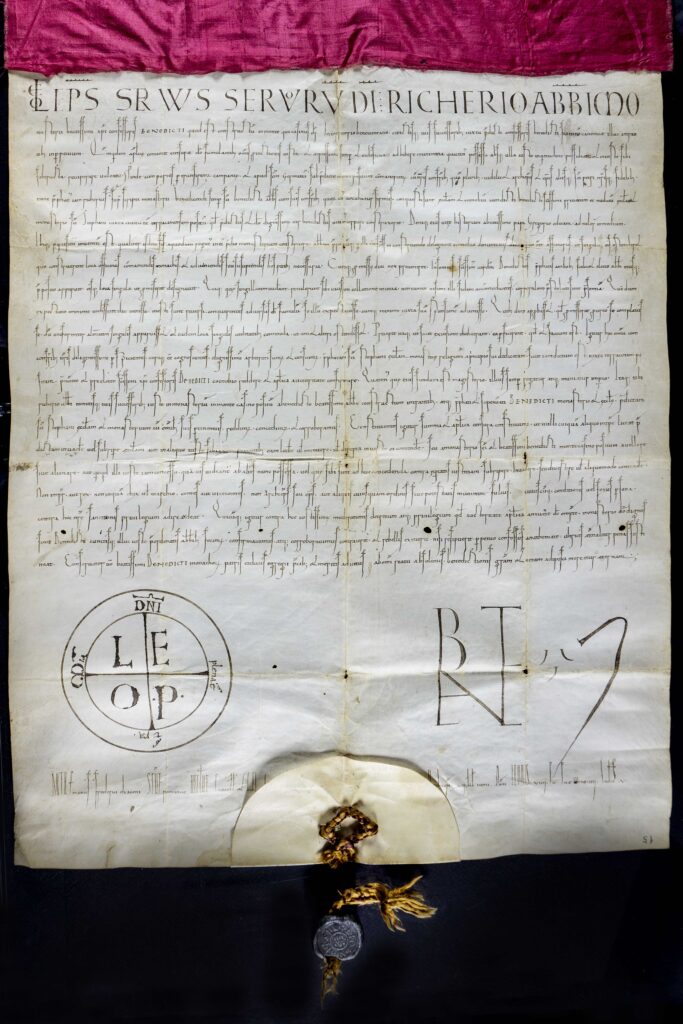
Biblioteca statale del Monumento nazionale di Montecassino, Archivio, Aula 3, caps. 02, no. 015: a privilege issued by Pope Leo IX on 20 May 1052, with a red silk protective veil sewn onto the document.
Approximately half of the documents are in a good state of preservation, while the remainder show clear signs of damage caused by damp, mould, insects and tears. In some cases, this has made the parchment extremely fragile and has resulted in the loss of substantial portions of the support. Significant corrosion caused by the so-called “lead disease” can also be observed on the bullae attached to many public charters.
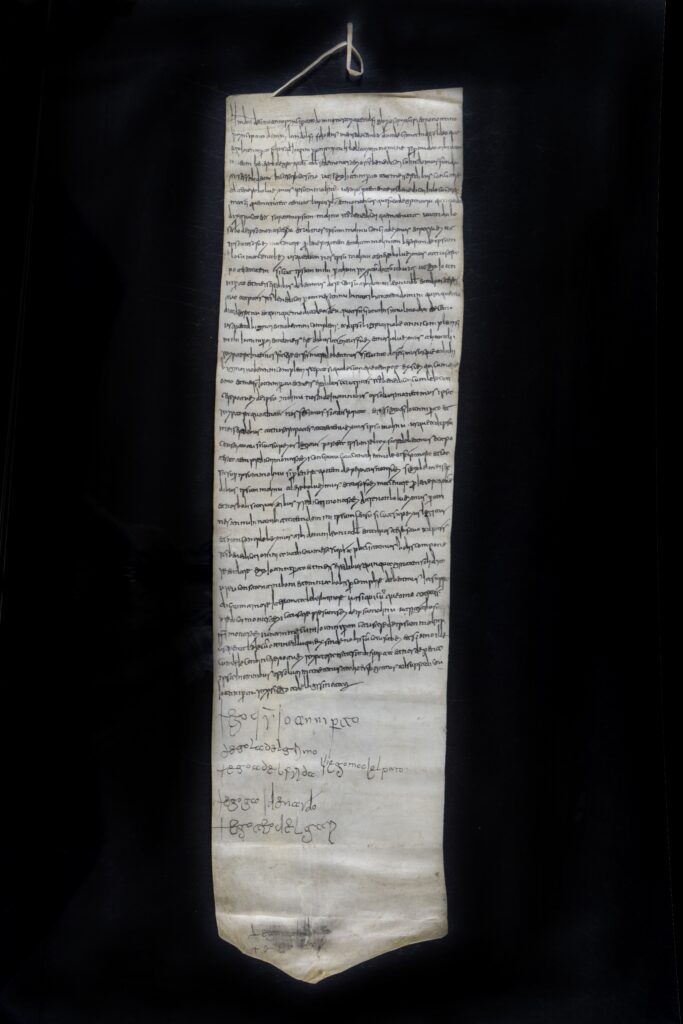
The condition of the selected documentary corpus created considerable difficulties during the digitisation campaign. The work proceeded more slowly because each document had to be handled differently according to its format and state of preservation. For reasons of prudence, it was therefore necessary, albeit reluctantly, to exclude slightly fewer than one hundred items. The first phase of image acquisition involved 535 documents measuring no more than 440 × 520 mm and bearing neither seals nor bullae. Each item was carefully unrolled on the planetary scanner provided by the University of Cassino Research Unit, allowing high-resolution images to be captured of both recto and verso.
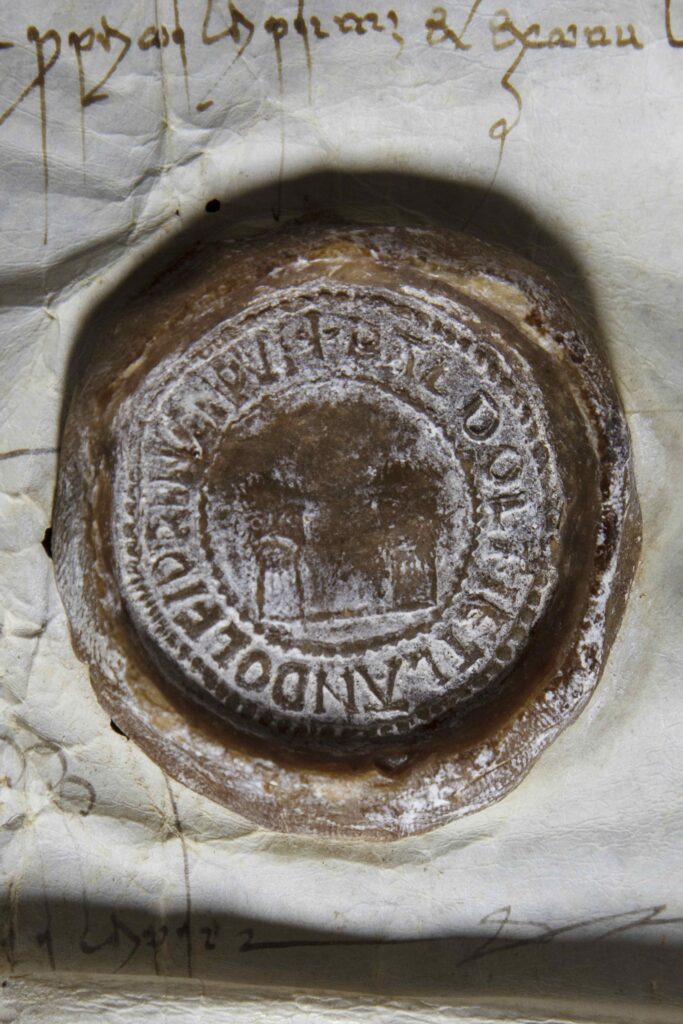
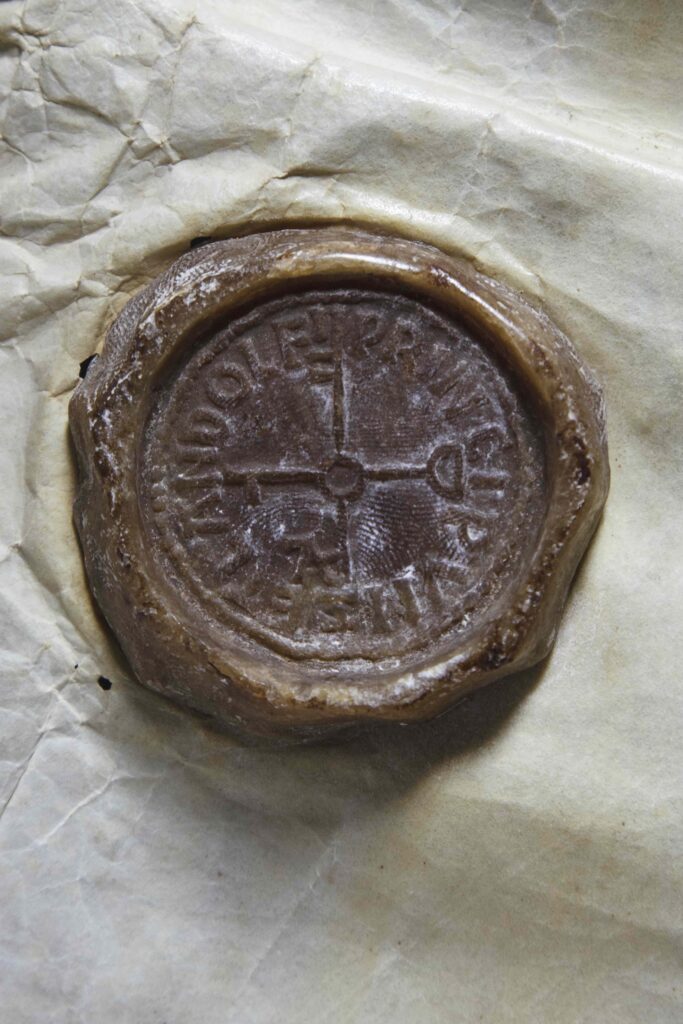
A further 293 items, larger in size and bearing seals or bullae, were subsequently flattened as far as their condition permitted with the aid of a large sheet of Plexiglas. Both sides were photographed by a professional photographer using a digital camera. The same procedure was applied to the bullae and seals, including those no longer attached to their documents, which were photographed both in situ and in detail.
Below: Biblioteca statale del Monumento nazionale di Montecassino, Archivio, Aula 3, caps. 10, no. 024: the applied seal, with counterseal, of the princes of Capua Paldolf I and Landolf III (charter dated 7 June 967).
The scale of the corpus made it necessary to postpone the preparation of a full scholarly edition according to traditional editorial methods, which would have required a larger team of editors and considerably more time. A more realistic objective was therefore adopted: the development of a metadata set suitable for the different platforms on which the acquired images would be published. This set had to represent the nature and distinctive features of legal documents while remaining compatible with the metadata developed concurrently for Montecassino’s manuscripts and incunabula. The most significant result achieved to date is the development of a Document Record, now available in the Manus Online database. Created by the Sapienza Research Unit in collaboration with the Istituto Centrale per il Catalogo Unico, this standardised descriptive model meets the specific requirements of the documentary collections of the Abbey of Montecassino. It can also be used by cataloguers in other Italian libraries when describing their own documentary holdings.
The Document Record was presented on 26 February 2025 during the study meeting Documenti medievali e Manus Online: sfide, tentativi e possibili soluzioni. It was subsequently presented as part of the two-year second-level Master’s programme in Metodi, strumenti, tecnologie per l’analisi, la descrizione e la documetazione del patrimonio manoscritto e stampato antico at the University of Cassino and Southern Lazio, on 7 and 14 March 2025, and during the seventh edition of the Digital Humanities Workshop organised by the University of Macerata on 5 June 2025.