


MeMo in Dialogue with International Research
Two Meetings in Grenoble and Paris Dedicated to the Study of Medieval Manuscripts
The MeMo – Memory of Montecassino project was recently presented at the Université Grenoble Alpes as part of the seminar series Actualités de la recherche, addressed to students of literature and the humanities.
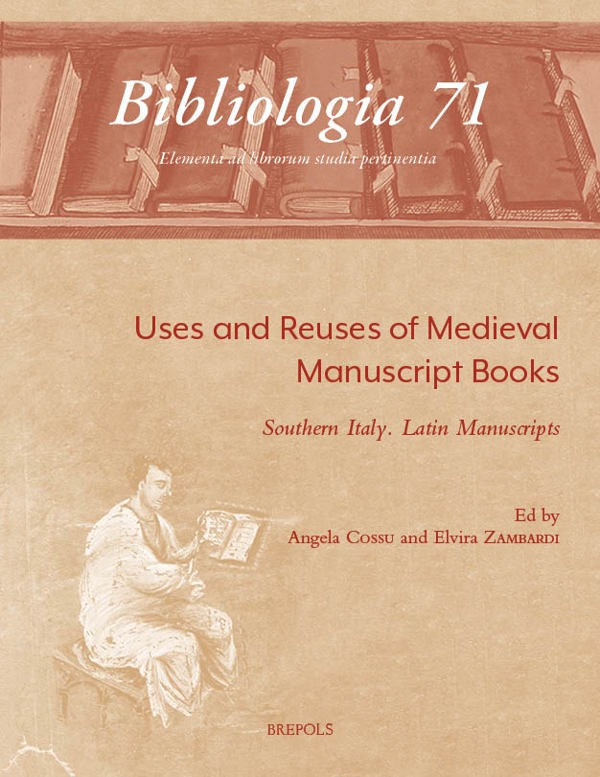
On 4 March 2026, Angela Cossu, Associate Professor at the University of Grenoble, and Elvira Zambardi – currently in France as the recipient of the Robert de Sorbon Fellowship (2025–2026) at the Laboratoire de médiévistique occidentale de Paris of Université Panthéon-Sorbonne – presented the volume Uses and Reuses of Medieval Manuscript Books. Southern Italy. Latin Manuscripts, forthcoming with Brepols. The book stems from a shared research project developed over the past few years. The book stems from a shared research project developed over the past few years.
During the seminar, the speakers first reconstructed the scholarly origins of the work, recalling the international conference Usi e riusi del libro manoscritto nel Medioevo meridionale, held in March 2023 at the École française de Rome and the University of Cassino. The conference was actively promoted and organised with the participation of the MeMo project, together with the Scuola Superiore Meridionale and the Institut de Recherche et d’Histoire des Textes.
At the centre of the discussion was the “life” of medieval manuscripts. If the history of a codex begins with its copying and physical assembly, it certainly does not end there. Manuscripts are read, annotated, corrected, sometimes dismantled, restored, or reassembled; they move across places and contexts often far removed from those for which they were originally produced. Marginalia, traces of reading, decorative interventions, and structural modifications testify to these transformations and allow scholars today to reconstruct the concrete impact of books on the intellectual life of different communities and cultural environments.
The Grenoble seminar also offered an opportunity to present to French students the current activities of the MeMo project, with particular attention to its main achievements, including the ongoing cataloguing and digitisation of manuscripts and the development of the project’s digital platform.
Part of the meeting was devoted to the editorial work that followed the conference and eventually led to the publication of the volume. The speakers illustrated the different stages of the editorial process – from the revision of the individual contributions to their scientific coordination – highlighting the formative dimension of these activities and their importance for students and early-career researchers.
The second part of the seminar focused on one of the contributions included in the volume: the study by Elvira Zambardi and Chiara De Angelis, entitled Reuses of Reuses: The Case of Glossed Biblical Fragments at Montecassino. The research examines a group of fragments from glossed Bibles preserved at the Abbey of Montecassino and proposes, through their analysis, several hypotheses concerning the material and textual structure of the manuscripts from which they originate.
More specifically, the investigation makes it possible to identify and partially reconstruct three glossed biblical manuscripts now preserved in fragmentary form – a Psalter, a manuscript of Genesis, and one of Jeremiah – thus bringing to light three witnesses of glossed Bibles. Particular attention was devoted to two fragments that most likely belonged to a bifolium originally extracted from manuscript Casinensis 436, which was presented to the students in digital form through the MeMo platform.
The presentation of the platform and the activities of the MeMo project had also been proposed a few weeks earlier in Paris, during the lecture La Bible glosée au Mont-Cassin : entre réception et appropriation, delivered by Elvira Zambardi on 18 February in the Salle Perroy of Université Panthéon-Sorbonne. On that occasion as well, the project contributed to the dissemination and international visibility of research on the manuscript heritage of Montecassino.